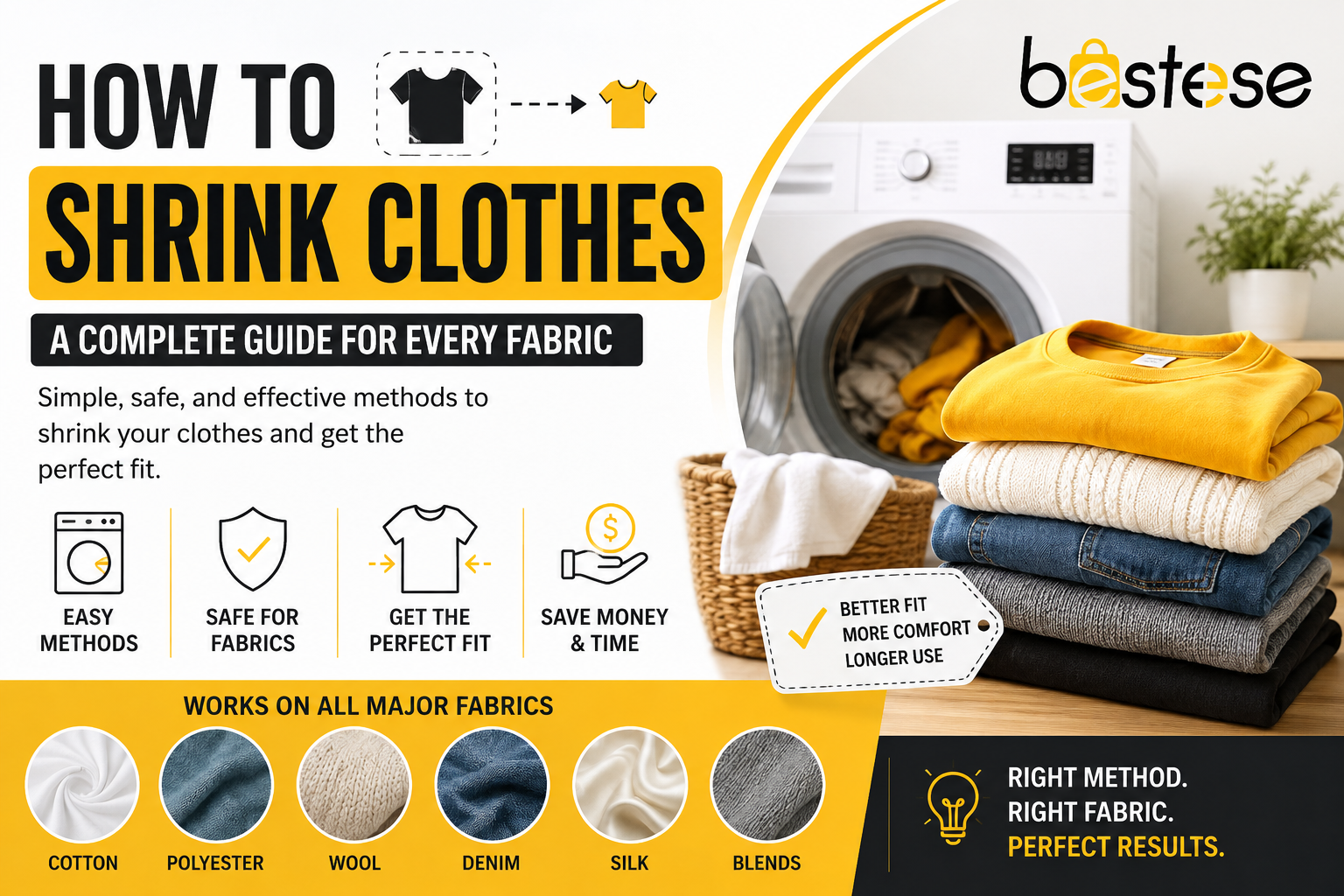
Buying clothes that are slightly too big is more common than you may think. Whether it's a cotton T-shirt, hoodie, denim jacket, or wool sweater, an oversized fit doesn't always appear or feel the way you expected. Fortunately, learning how to shrink clothes can let you acquire a better fit without replacing your favorite garments.
Different fabrics react differently to heat, water, and drying methods. While natural fibers like cotton and wool shrink more easily, synthetic materials such as polyester need extra care. By using the accurate technique for each fabric, you can lower the size of your clothing without destroying its quality or shape.
If you're also interested in creating stylish apparel after achieving the best fit, check out our guide to best-selling T-shirt designs for inspiration.
Things to Consider Before Shrinking Clothes
Before attempting to shrink any garment, it's crucial to understand the fabric and obey the manufacturer's care guidelines. A little preparation can prevent accidental destruction and help you get the outcomes you want.
Know Your Fabric
· Cotton shrinks simply.
· Wool shrinks rapidly and needs careful handling.
· Denim responds well to heat.
· Polyester is more resistant to shrinking.
· Silk requires gentle treatment to prevent damage.
Always recognize the fabric before using hot water or a dryer.
Read the Care Label
The care label gives essential information regarding washing temperatures and drying procedures. Some garments are pre-shrunk during manufacturing, while others might shrink significantly if exposed to excessive heat.
Overlooking these instructions can result in uneven shrinkage, fading, or fabric damage.
Consider the Garment Quality
Higher-quality clothing generally shrinks more evenly while preserving its shape. Lower-quality garments might lose their structure or become distorted after continuous exposure to heat.
How to Shrink Cotton Clothes
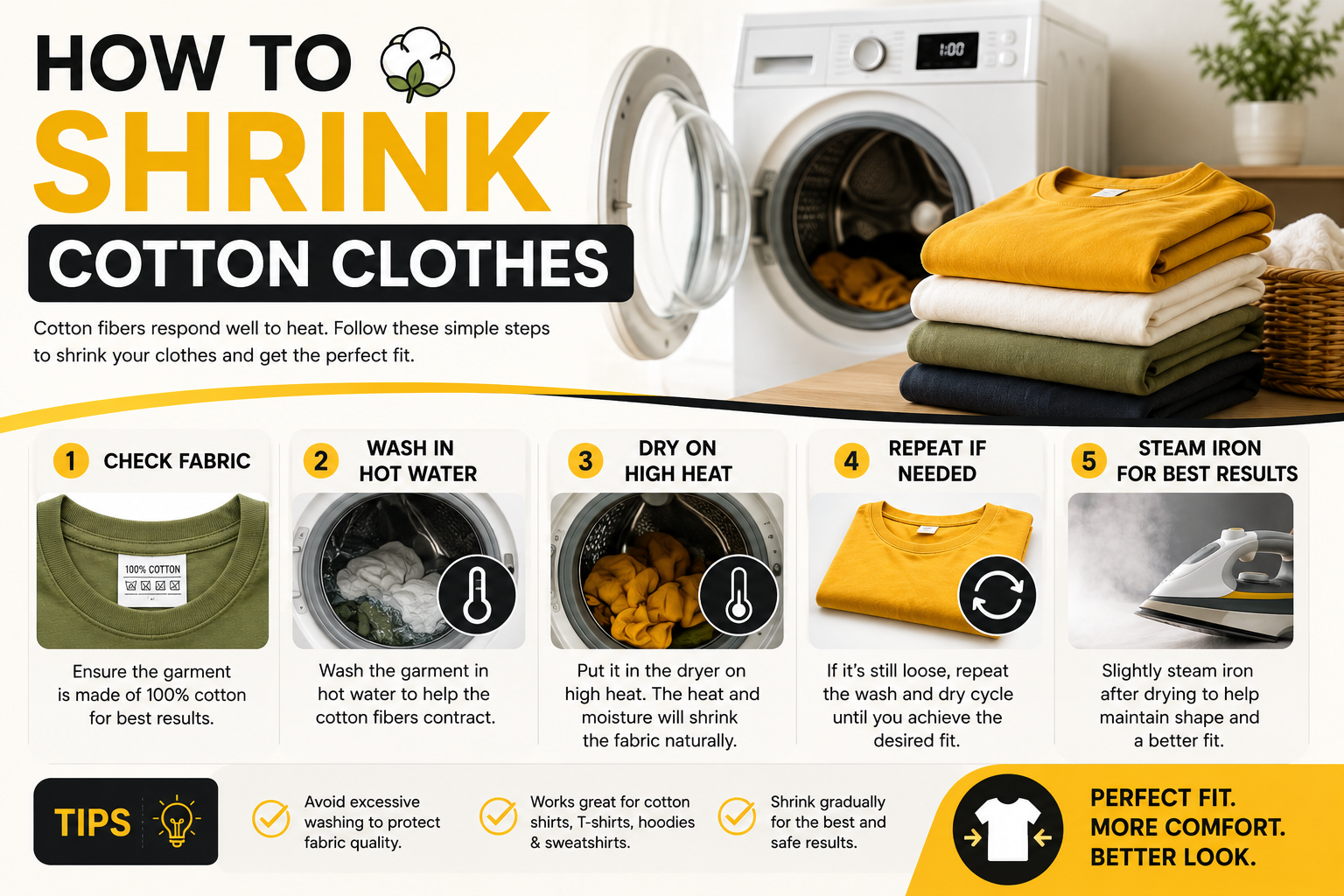
Cotton is one of the simplest fabrics to shrink because its natural fibers respond well to heat.
If you're wondering how to shrink clothes made from cotton, easily wash the garment in hot water and put it in the dryer on a high-heat setting. The combination of heat and moisture causes the fibers to contract naturally.
If the garment is still slightly loose after one cycle, repeat the process until you get the desired fit. However, avoid excessive washing, as continuous shrinking might lower the lifespan of the fabric.
Many people also search for how to shrink cotton shirts because oversized T-shirts are extremely common. The same method works well for cotton shirts, sweatshirts, and hoodies. For even better results, slightly steam-iron the garment after drying to help keep its shape.
How to Shrink Polyester Clothes
Polyester is much more resistant to shrinking than natural fabrics. Although it won't shrink as dramatically as cotton, controlled heat can still produce the best results.
Wash the garment using the hottest water suggested on the care label, then dry it on a high-heat cycle. You may need to repeat the process once or twice before observing significant shrinkage.
Be careful not to overheat polyester, as excessive temperatures might weaken the fibers or cause unwanted wrinkles.
How to Shrink Wool Clothes
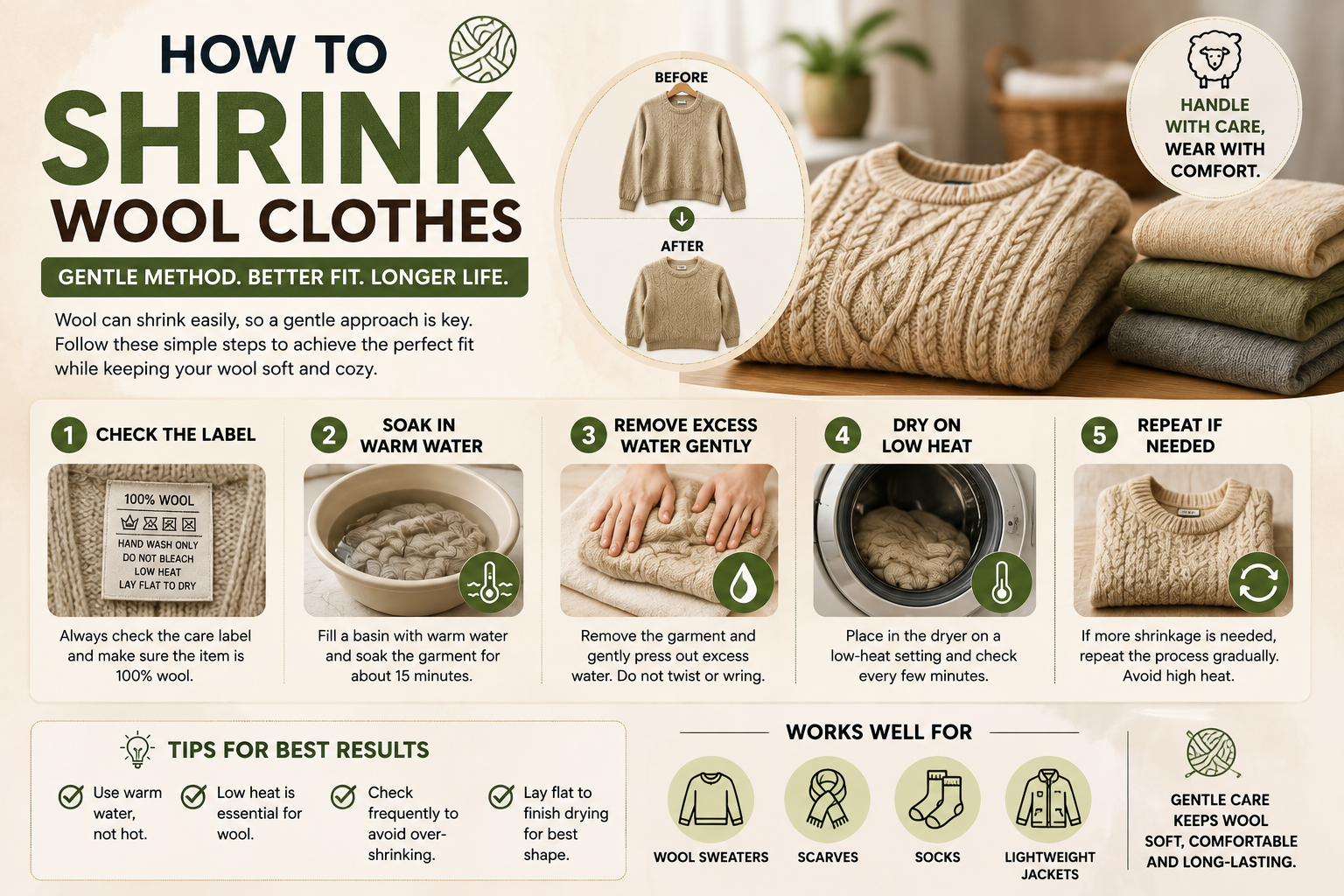
Wool requires a much gentler approach because it can shrink very frequently.
Fill a basin with warm water and soak the garment for around 15 minutes. After soaking, carefully remove excess water without twisting the fabric. Put the garment in the dryer on a low-heat setting and check it every few minutes.
If additional shrinkage is required, repeat the process gradually rather than exposing the garment to excessive heat all at once.
This technique works well for wool sweaters, scarves, socks, and lightweight jackets while helping preserve their softness.
How to Shrink Denim Clothes
Denim naturally tightens when exposed to heat, making it one of the simplest materials to resize.
Wash your jeans or denim jacket in hot water before drying them on a high-heat cycle for about 30 minutes. This process tightens the cotton fibers and builds a better overall fit.
If your denim still feels loose, repeat the washing process once more. Keep in mind that repeated high-temperature washing might slowly fade darker denim colors.
How to Shrink Silk Clothes
Silk is one of the most delicate fabrics, so shrinking it requires extra caution.
Wash silk gently in warm - not boiling - water using a mild detergent. After washing, dry it on the lowest heat setting for only a short period. Check the garment frequently to prevent over-shrinking.
Another safe option is using steam to relax and slightly tighten the fibers while maintaining the fabric's luxurious appearance
Common Mistakes to Avoid
· Applying extremely high heat on delicate fabrics.
· Overlooking the garment's care label.
· Leaving clothes in the dryer for too long.
· Shrinking garments continuously without checking the fit.
· Using harsh detergents on delicate materials.
Taking your time will always give better and more consistent results.
Frequently Asked Questions About How to Shrink Clothes
Q1: Does hot water shrink clothes?
Yes. Hot water causes natural fibers such as cotton and wool to contract, making garments smaller after washing and drying.
Q2: Can polyester shrink?
Polyester can shrink slightly with repeated exposure to high heat, although it is much more resistant than cotton.
Q3: How many times can you shrink clothes?
Most garments only require one or two shrinking cycles. Repeated heat exposure may reduce fabric durability over time.
Q4: Can you shrink clothes without a dryer?
Yes. Warm water, steam ironing, or controlled air drying can produce gentle shrinkage, especially for delicate fabrics.
Q5: How do you shrink cotton shirts safely?
The safest method is washing them in hot water followed by high-heat drying while checking the fit after each cycle. This is one of the most reliable ways to shrink cotton shirts without causing excessive damage.
Final Thoughts
Knowing how to shrink clothes is a useful skill that can save money and extend the life of garments that are slightly too large. Whether you're resizing cotton, polyester, denim, wool, or silk, always choose the method that matches the fabric type and follow the care instructions carefully.
If you're planning to customize apparel after achieving the perfect fit, understanding different types of T-shirt necklines can help you select styles that match your personal taste or brand identity. With the right shrinking techniques and proper fabric care, your clothing can look, fit, and feel better for years to come.
 Track Your Order
 support@besteese.com
 737-231-1208
 Don’t Miss Out! Save Up to 20% on All Items!



Comments (0)
No comments yet. Be the first to comment!
Leave A Comment